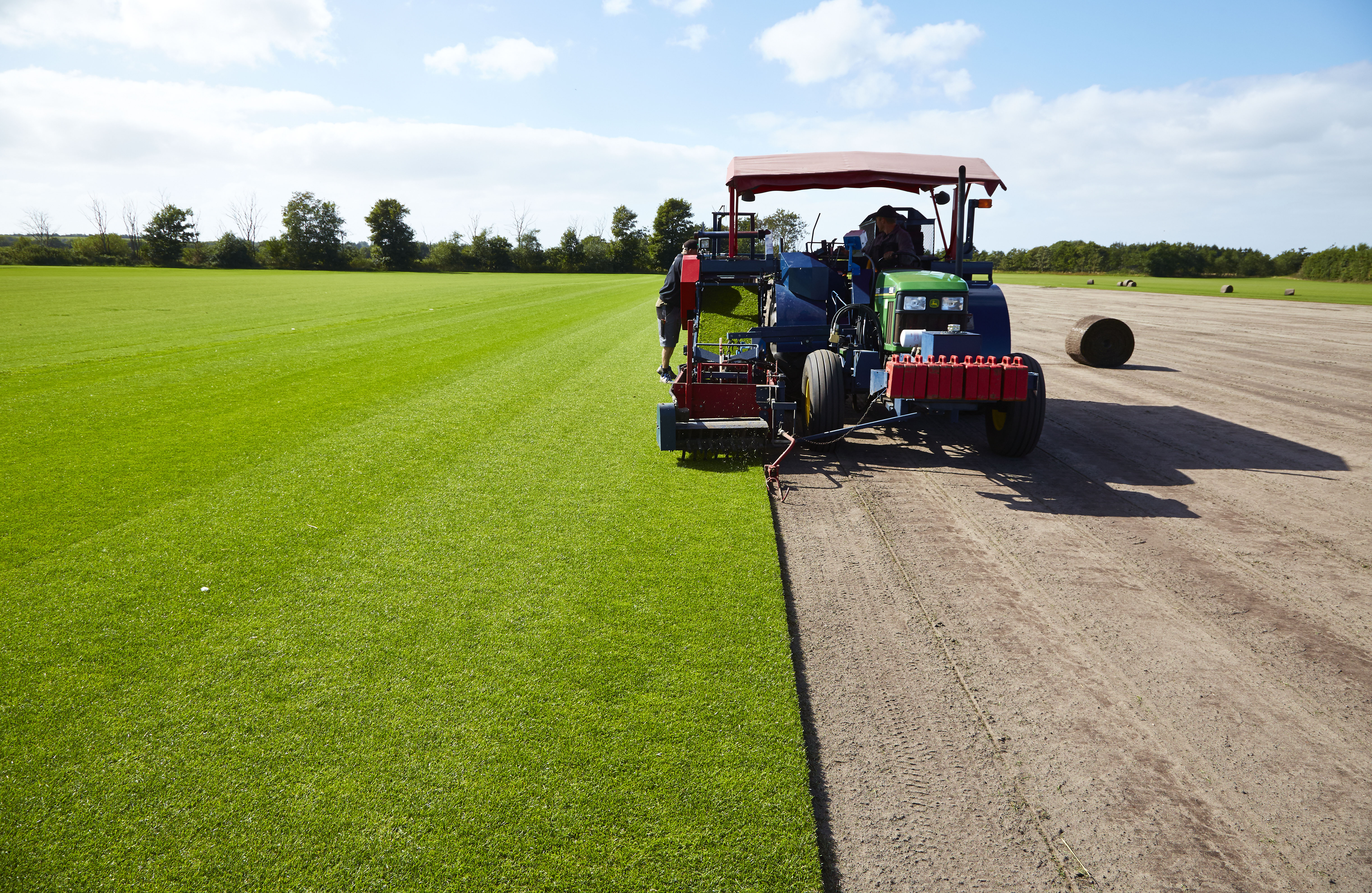
The challenge is no longer to produce high-quality sod. The challenge is producing the sod consistently under increasingly unpredictable conditions.
Extended dry spells place stress on turf throughout the sod production cycle. Establishment becomes more difficult, recovery after stress takes longer, and maintaining uniformity across production fields requires greater irrigation input. Even when sufficient irrigation is available, many producers are asking the same question:
How can we produce the same quality turf while using water more efficiently?
This is where DLF’s 4turf® tetraploid perennial ryegrass offers clear advantages.
Bigger seed, stronger start
One of the key characteristics of 4turf® is its larger seed compared with traditional diploid perennial ryegrass. The larger seed contains greater energy reserves, allowing seedlings to establish rapidly and develop stronger root systems from the earliest growth stages. Faster establishment is valuable in sod production, but it becomes particularly important when young plants are exposed to heat or drought stress.
4turf® varieties also germinate at lower temperatures than traditional perennial ryegrasses, giving sod producers greater flexibility when establishing new crops. Quicker establishment and faster ground cover help create a more uniform turf stand while reducing the vulnerability of young seedlings to environmental stress.
Rooting depth makes the difference
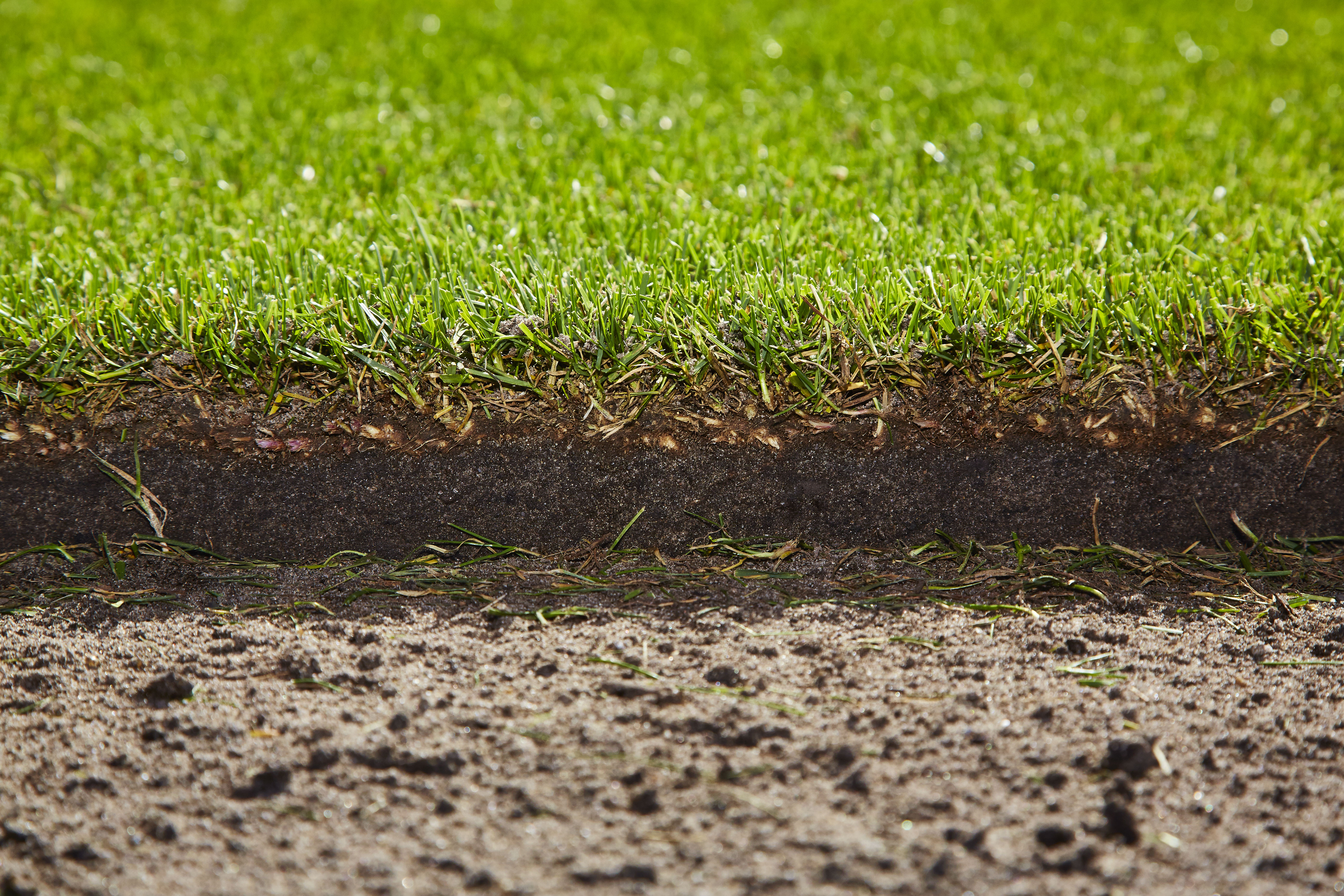
When drought arrives, what happens below the surface becomes critical.
Years of breeding and development have produced 4turf® varieties with strong roots that allow plants to access water deeper within the soil profile. This fast root growth and more extensive root system helps turf maintain performance during dry periods and recover more quickly when rainfall or irrigation returns.
For sod producers, this means a turf that better maintain quality and performance during extended periods of dry weather. Even on irrigated sod farms, stronger roots can provide an important buffer between irrigation cycles, helping maintain plant health and turf quality during periods of high evapotranspiration and high temperatures. While irrigation remains essential, deeper rooting faster helps turf make the most of available moisture and maintain quality for longer during dry conditions.